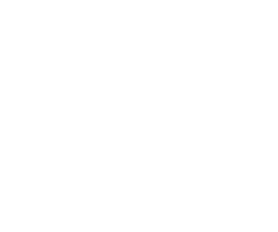
The '''accessible information''' is the amount of classical information that can be extracted from a quantum system by an optimal measurement when the information is encoded using a particular [[ensemble]] of quantum states.
More precisely, consider an ensemble where the probabilities come from the random variable . Let be the random variable that denotes the outcomes of the measurement described by a [[POVM]] . The [[mutual information]] between and
:
quantifies how much information contains about . The accessible information is the maximum of this when all possible POVMs are possible,
:
== Bounds ==
The accessible information is upper bounded by the [[Holevo quantity]]Holevo1973,
:
where is the [[von Neumann entropy]].
By substituting the von Neumann entropy in the Holevo quantity for the [[subentropy]] , one gets a lower bound JozsaRobbWootters1994,
:
== SOMIM (open-source code) ==
There is an open-source program code called '''SOMIM''' ('''S'''earch for '''O'''ptimal '''M'''easurements by an '''I'''terative '''M'''ethod), which calculates the maximal mutual information (accessible information). For a given set of statistical operators, SOMIM finds the POVMs that maximize the accessed information, and thus determines the accessible information and one or all of the POVMs that retrieve it. The maximization procedure is a steepest-ascent method that follows the gradient in the POVM space, and also uses conjugate gradients for speed-up.
The complete set of files including the codes and manual can be found at the '''SOMIM''' website: http://www.quantumlah.org/publications/software/SOMIM/.
[[Category:Quantum Information Theory]]
