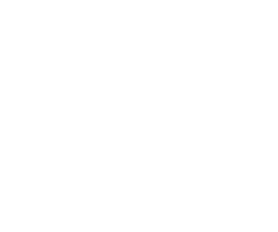
Let be the set of complex-valued matrices. Let us consider a matrix and denote its complex conjugate by and its transpose by . We then have the following
'''Definition: A matrix is said to be ''Hermitian'' if , where . It is ''skew-Hermitian'' if .'''
A '''Hermitian matrix''' can be the representation, in a given orthonormal basis, of a [[self-adjoint operator]].
== Properties of Hermitian matrices ==
For two matrices we have:
# If is Hermitian, then the main diagonal entries of are all real. In order to specify the elements of one may specify freely any real numbers for the main diagonal entries and any complex numbers for the off-diagonal entries;
# , and are all Hermitian for all ;
# If is Hermitian, then is Hermitian for all . If is nonsingular as well, then is Hermitian;
# If are Hermitian, then is Hermitian for all real scalars ;
# is skew-Hermitian for all ;
# If are skew-Hermitian, then is skew-Hermitian for all real scalars ;
# If is Hermitian, then is skew-Hermitian;
# If is skew-Hermitian, then is Hermitian;
# Any can be written as
:
where respectively are the Hermitian and skew-Hermitian parts of .
'''Theorem: ''' Each can be written uniquely as , where and are both Hermitian. It can also be written uniquely as , where is Hermitian and is skew-Hermitian.
'''Theorem:''' Let be Hermitian. Then
# is real for all ;
# All the eigenvalues of are real; and
# is Hermitian for all .
'''Theorem:''' Let be given. Then is ''Hermitian'' if and only if at least one of the following holds:
# is real for all ;
# is normal and all the eigenvalues of are real; or
# is Hermitian for all .
'''Theorem [the spectral theorem for Hermitian matrices]: ''' Let be given. Then is ''Hermitian'' if and only if there are a unitary matrix and a real diagonal matrix such that . Moreover, is real and Hermitian (i.e. real symmetric) if and only if there exist a real orthogonal matrix and a real diagonal matrix such that .
'''Theorem:''' Let be a given family of Hermitian matrices. Then there exists a unitary matrix such that is diagonal for all if and only if for all .
== Positivity of Hermitian matrices ==
'''Definition:''' An Hermitian matrix is said to be ''positive definite'' if
: for all
If , then is said to be ''positive semidefinite''.
The following two theorems give useful and simple characterizations of the positivity of Hermitian matrices.
'''Theorem:''' A Hermitian matrix is positive semidefinite if and only if all of its eigenvalues are nonnegative. It is positive definite if and only if all of its eigenvalues are positive.
In the following we denote by the leading principal submatrix of determined by the first rows and columns: .
As for any positive matrix, if is positive definite, then ''all'' principal minors of are positive; when is ''Hermitian'', the converse is also valid. However, an even stronger statement can be made.
'''Theorem:''' If is Hermitian, then is positive definite if and only if for . More generally, the positivity of ''any'' nested sequence of principal minors of is a necessary and sufficient condition for to be positive definite.
[[Category:Linear Algebra]]
[[category:Handbook of Quantum Information]]
== Bibliography ==
* R. A. Horn and C. R. Johnson, ''Matrix analysis'', Cambridge University Press (1985).
