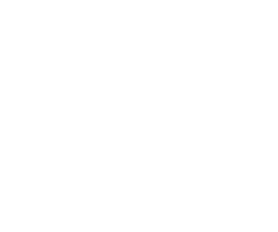
An '''isotropic state'''horodecki97reduction is a dimensional [[bipartite]] quantum state that is invariant under any unitary of the form , where * denotes complex conjugate. That is, any state with the property that for any unitary U on one part of the system,
:
== Parametrization ==
The isotropic states is a one-parameter family of states and can be written as
:
where and
i.e. a [[mixture]] (or [[pseudomixture]] for )
of the maximally mixed state and the maximally entangled state.
In terms of the [[singlet fraction]] F, the [[fidelity]] to the maximally entangled state, the isotropic states can be parametrized as
:
where 0 ≤ F ≤ 1.
== Properties ==
Isotropic states are separable for F ≤ 1/d or equivalently α ≤ 1/(d+1), and entangled otherwise. All entangled isotropic states violate the [[reduction criterion|reduction separability criterion]], and are therefore also [[Entanglement distillation|distillable]].
== See also ==
* [[Werner state]]
== References ==
[[Category: Quantum States]]
