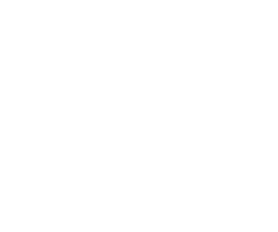
'''Definition: In a finite dimensional space, given any linear operator defined on the whole space, there exists an operator such that '''
:
''' is uniquely determined and is called the ''adjoint'' of .'''
It must be noticed that for bounded operators the adjoint operator can be defined naturally, whereas for unbounded operators this can be done only if the domain of , , is dense in and only for those vectors for which is a continuous function of . The set of these vectors is a vectorial subset of and by definition it will be the domain, , of .
'''Definition:''' A linear operator is said to be:
# a ''Hermitian'' operator if , i.e. if
:;
# a ''[[symmetric operator]]'' if and , where is the complement of ;
# a '''self-adjoint''' operator if and .
For bounded linear operators, and in particular for linear operators in finite dimensional Hilbert spaces, the three definitions coincide.
'''Proposition: A necessary and sufficient condition for the linear operator to be ''Hermitian'' is that '''
:
'''Proof:''' This equality certainly implies the definition 1. of Hermitian operator. The converse is true because of the following identity, which can be easily verified:
:
The matrix which represents the ''adjoint'' of a linear operator in any orthonormal basis is the Hermitian conjugate of the matrix representing . Indeed its matrix elements are given by:
:.
So, if a bounded linear operator is '''self-adjoint''', it is represented by a [[Hermitian matrix]] in any orthonormal basis.
[[Category:Linear Algebra]]
[[category:Handbook of Quantum Information]]
